Peak Climbing
Your Peak. Your Challenge. Your Himalayan Adventure.
- Duration
- 1 Day
- Difficulty
- Extreme
- Location
- Everest, Annapurna & Manaslu regions
- Pricing
- Custom quote
At a glance
Overview
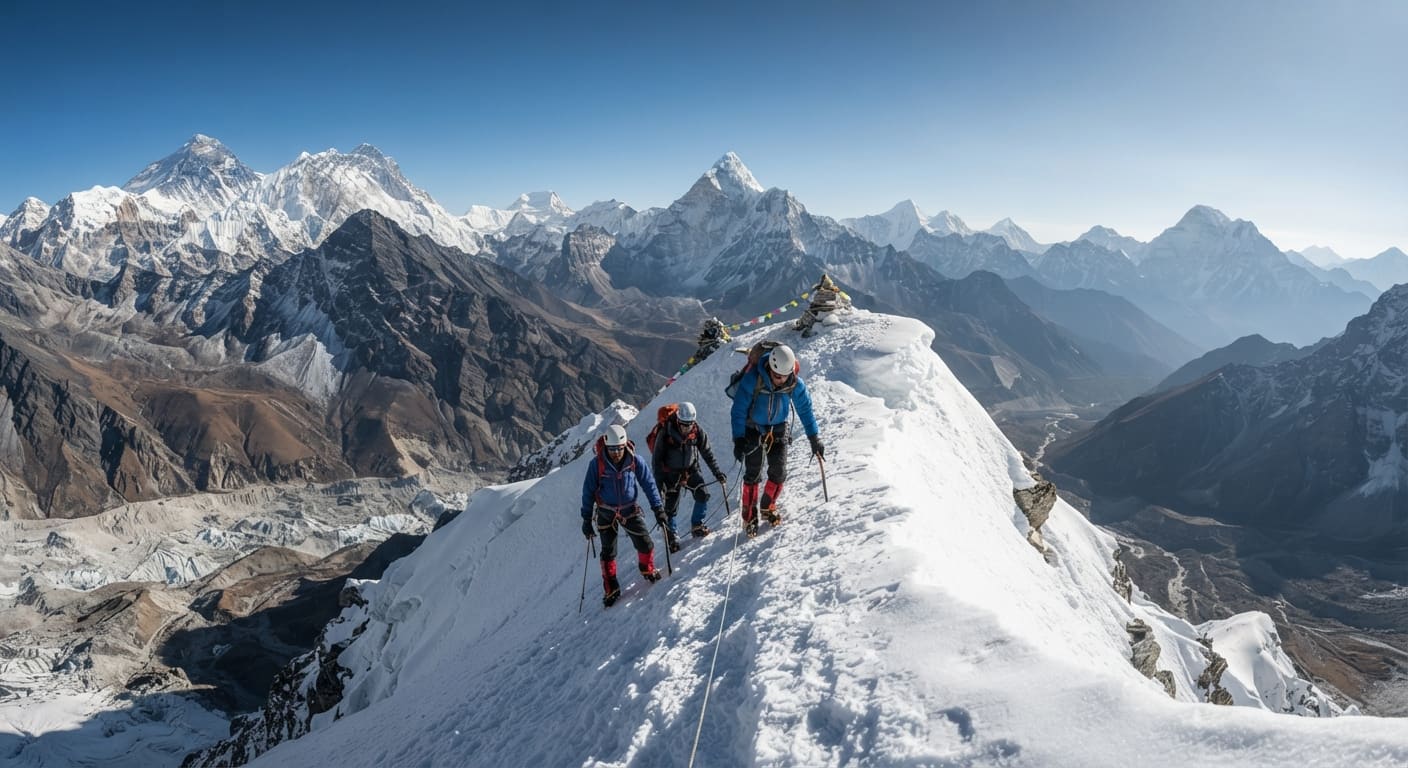
Peak climbing in Nepal is the natural next step for trekkers who want more than a base camp view — a real summit, reached on foot and rope. Nepal's official "trekking peaks" — Island Peak (6,189m), Mera Peak (6,476m), Lobuche East (6,119m) and dozens more scattered across the Everest, Annapurna, Langtang and Manaslu regions — sit in a sweet spot: technical enough to demand crampons, an ice axe and a rope team, approachable enough for strong trekkers with basic training. Shailung Trails builds every peak climbing itinerary around proper acclimatization, a qualified climbing leader and a realistic weather-window strategy, because summit success on a Himalayan peak is decided as much by pacing as by fitness. Whether you're after your first 6,000m summit or building toward an 8,000m expedition later, we'll help you pick the peak that matches your experience and pair it with the right season, route and support team.
Available destinations
Know before you choose
Why this adventure stands out
The defining experiences and details that make Peak Climbing distinctive.
Guided ascents of Island Peak, Mera Peak, Lobuche East and other classic Nepal trekking peaks
Experienced climbing leaders and a full technical support team (fixed ropes, ladders, oxygen on request)
Itineraries built around proper acclimatization, not just a fast summit push
Combine your climb with a classic trek — most peaks sit along Everest, Annapurna or Manaslu trail systems
Private and small-group departures, with dates built around your fitness and schedule
Pick your route
Choose your option
Before you go
Essential trip information
Best season
- +Pre-monsoon (March-May) and post-monsoon (late September-November) offer the most stable weather and clearest summit windows.
Group size
- +Private climbs or small teams of 2-8, plus a dedicated climbing Sherpa team
What to bring / know
- +Prior trekking experience at altitude (a Himalayan trek above 4,000m is strongly recommended before your first peak)
- +Personal climbing gear: harness, crampons, ice axe, ascender — rental available in Kathmandu
- +Comprehensive travel insurance covering high-altitude climbing and helicopter evacuation
- +A realistic buffer of 2-3 extra days in your itinerary for weather delays
Good to know
Frequently asked questions
Do I need prior climbing experience for peak climbing in Nepal?
No technical climbing background is required for most trekking peaks like Island Peak or Mera Peak, but you should be a fit, experienced high-altitude trekker. We run a short skills refresher at base camp before every summit push, covering rope work, crampon technique and ladder crossings.
What's the difference between peak climbing and a mountain expedition?
Peak climbing targets Nepal's officially designated "trekking peaks" (under 6,600m), which use fixed ropes and straightforward glacier routes. Mountain expeditions target the true 7,000-8,000m giants like Everest or Manaslu, involving multiple camps, extended acclimatization rotations and a much longer commitment.
Which peak should a first-time climber choose?
Island Peak and Mera Peak are the two most popular first Himalayan summits — both non-technical enough for well-prepared trekkers, with established routes and reliable local support.