Altitude and Acclimatization
Why acclimatization days matter more than fitness level on Nepal's highest treks, and how to recognize early symptoms of altitude sickness.

Altitude sickness can affect trekkers regardless of fitness level — it is caused by ascending faster than the body can adapt to lower oxygen levels, not by lack of physical conditioning.
The standard guidance above 3,000 m is to avoid increasing sleeping altitude by more than roughly 300-500 m per day, with a rest day roughly every 1,000 m of gain. This is why routes like Everest Base Camp and Annapurna Circuit build in dedicated acclimatization days at Namche/Dingboche and Manang.
Early symptoms include headache, nausea, fatigue and disturbed sleep. These are common and usually resolve with rest at the same altitude. The rule that matters most: never continue ascending if symptoms are worsening, and descend immediately if symptoms become severe (confusion, loss of coordination, or breathlessness at rest).
Staying well hydrated, avoiding alcohol during the trek, and pacing walking speed to conversation level (rather than pushing hard) all reduce the risk of acute mountain sickness.
A guide experienced on your specific route is one of the most effective safety measures available, since they can recognize warning signs and make an objective call to descend when a trekker might be inclined to push through.
Keep reading
 Safety & Health
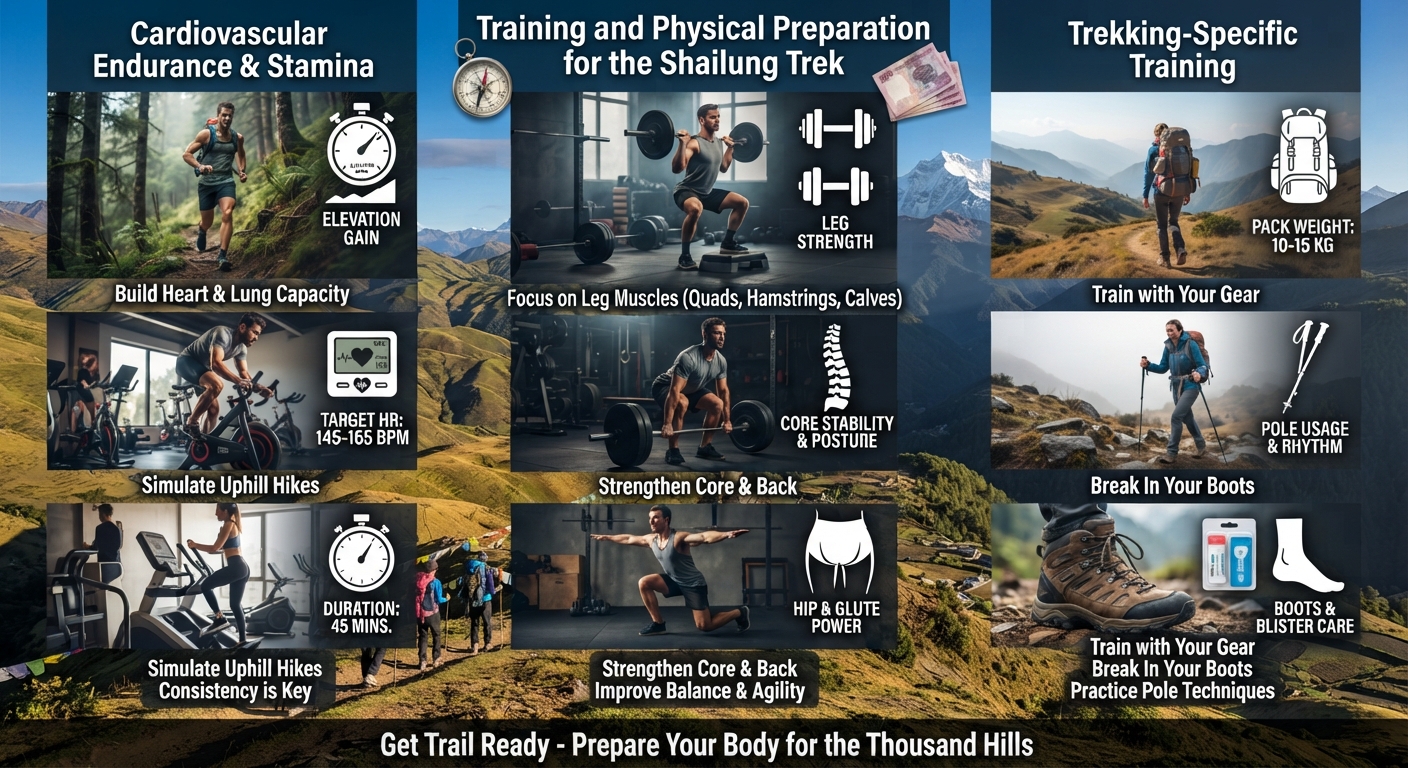
Training and Physical Preparation for the Shailung Trek: Get Trail Ready
Get ready for your journey with our Shailung Trek fitness guide. Learn essential cardio exercises, strength routines, and conditioning tips for the trail.
Read Guide →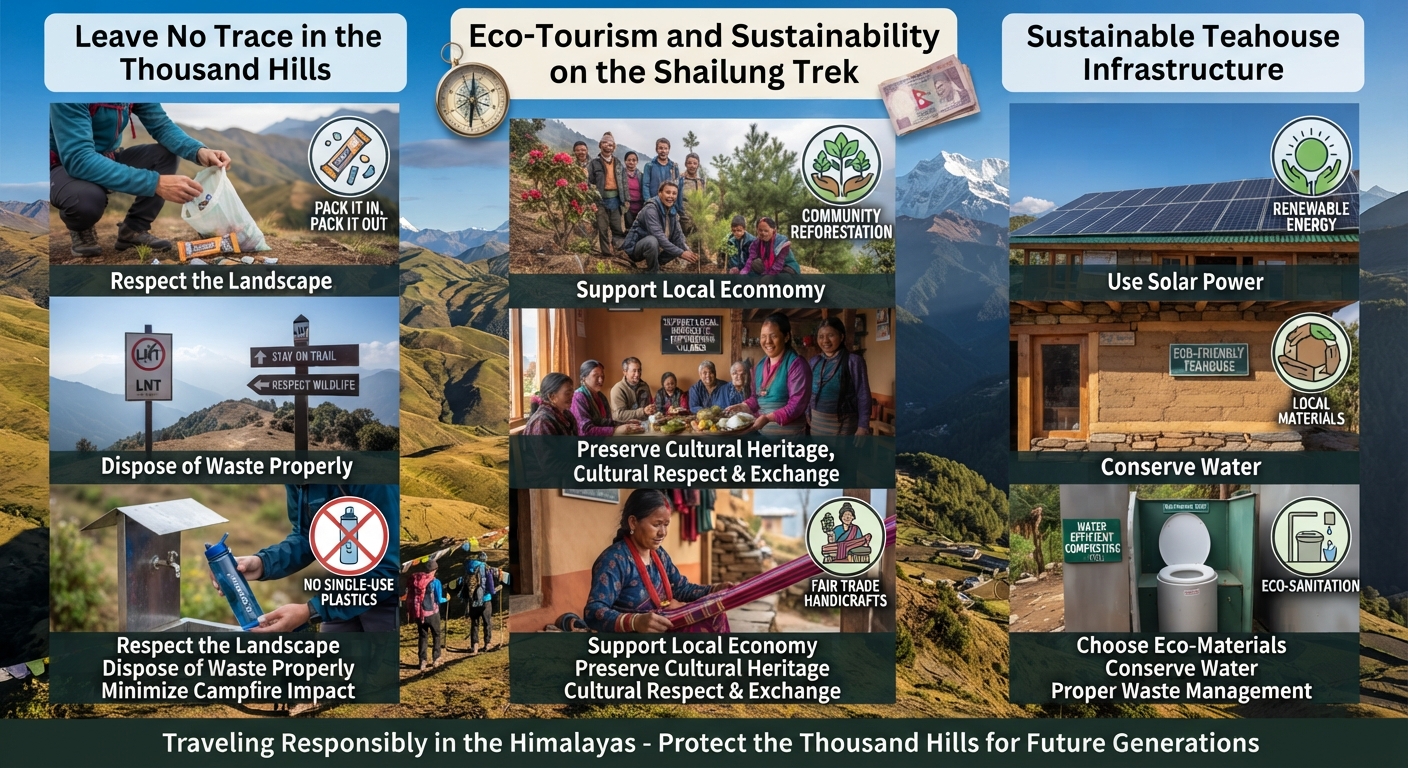 Culture & Community
Eco-Tourism and Sustainability on the Shailung Trek: Traveling Responsibly
Discover how to practice eco-tourism on the Shailung Trek. Learn responsible travel habits to preserve fragile mountain trails and support local villages.
Read Guide →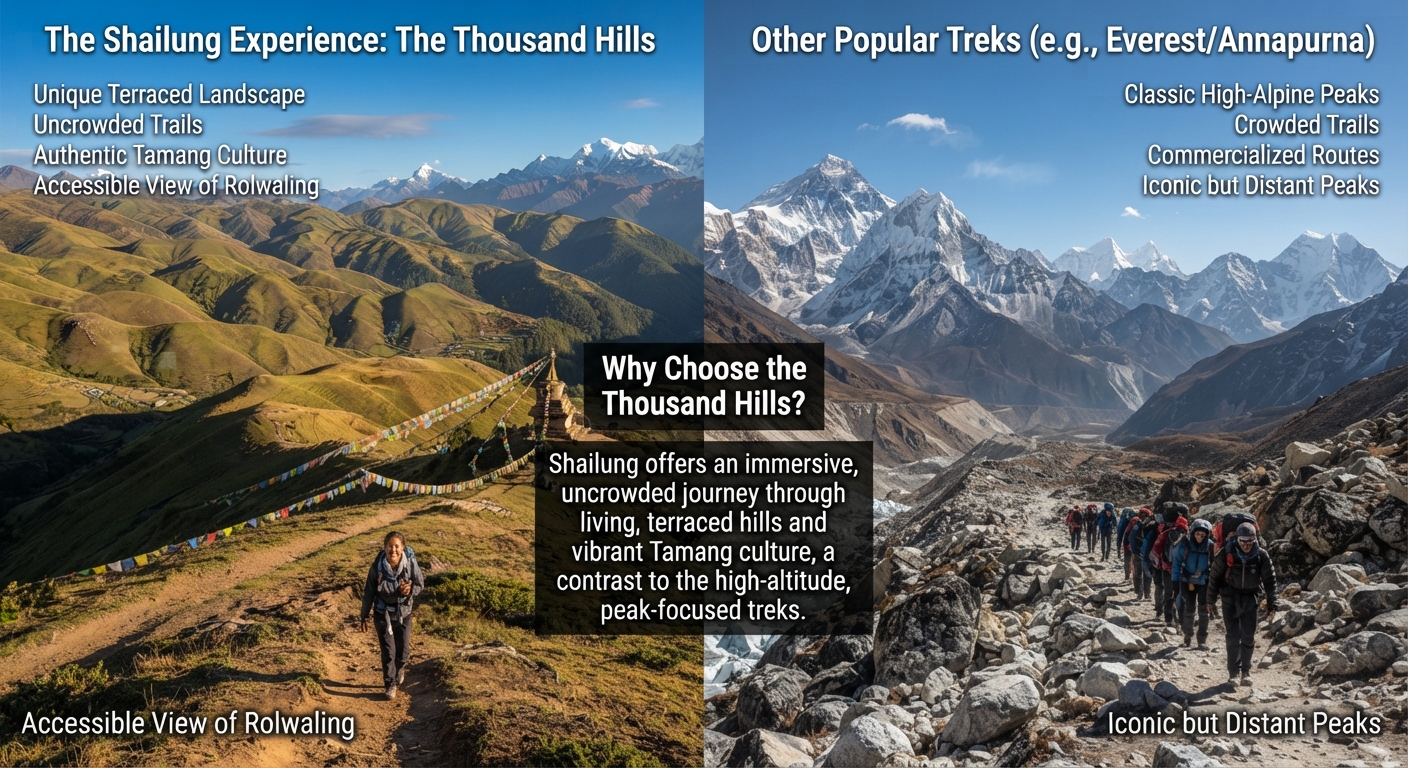 Route Guides
Shailung vs Other Nepal Treks: Why Choose the Thousand Hills?
Compare Shailung with popular Nepal treks like Annapurna and Everest. Discover why the thousand hills offer a unique, crowd-free, culturally rich alternative.
Read Guide →
Ready to Plan Your Trek?
Browse current treks or tell us what you have in mind and we'll help shape a realistic itinerary.